
Archifest 2025 round table sharing session: “don’t (just) think like an architect”
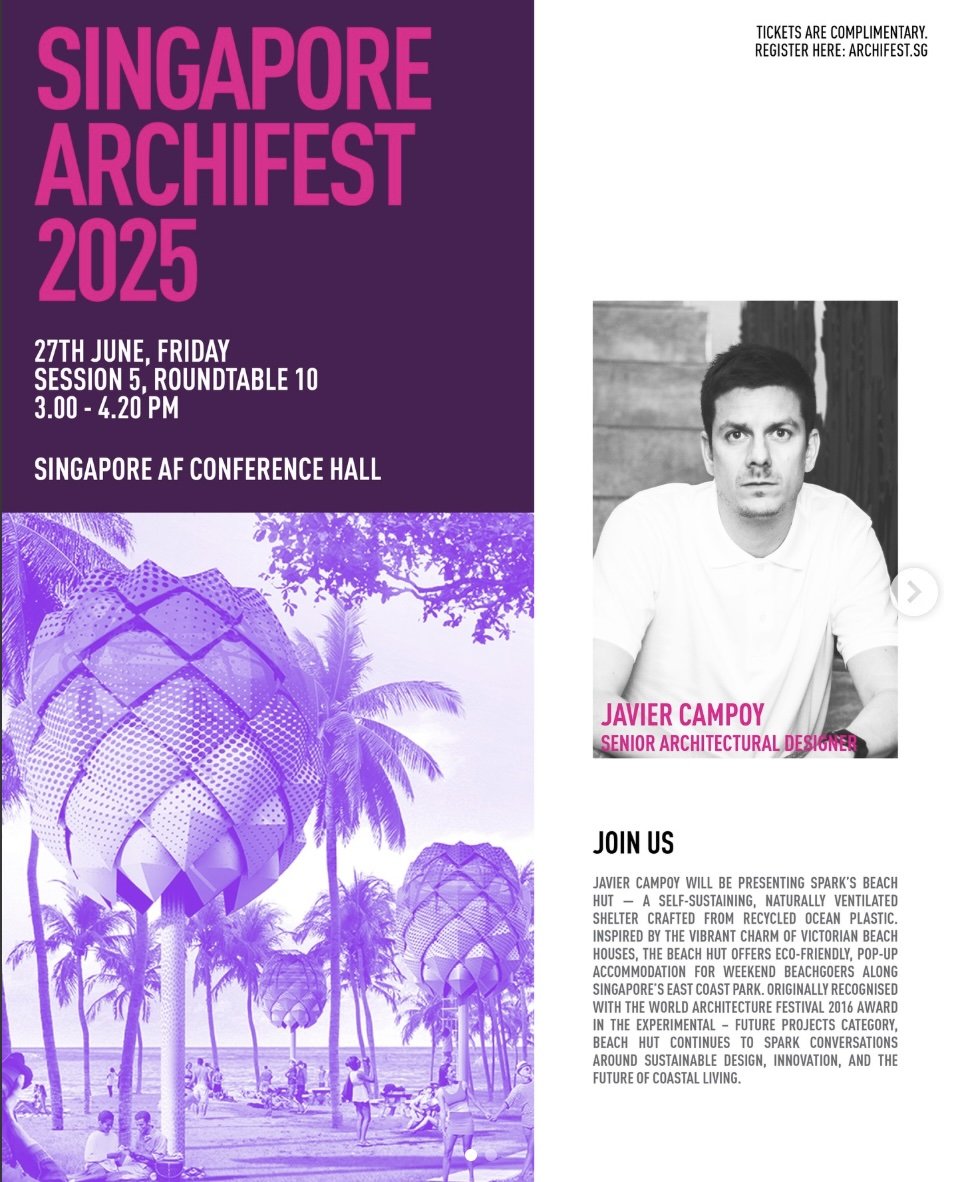
Making the invisible visible through colour and lightness
A small coastal shelter can hold a much larger question: how might architecture make us more attentive to the sea? On 27 June 2025, Javier Campoy presented SPARK Architects’ Beach Huts at the Architects Roundtable at Sands Expo & Convention Centre, Singapore, as part of Archifest 2025. Under the theme “Don’t (just) think like an architect”, the project offered a playful exploration of architecture’s capacity to give an environmental concern a memorable physical presence.
Conceived for East Coast Park, Beach Huts imagines a family of colourful shelters lifted above the shoreline on slender stems. Their overlapping skins and delicate silhouettes suggest an architecture poised between an inhabited object and a coastal landmark. We selected this unrealised project because its intimate scale makes room for an ambitious idea: to bring ocean plastic into public view through a place associated with pleasure, curiosity and escape.
The proposal asks what happens when the material we discard becomes something we are drawn towards. That encounter is the starting point for its architecture.
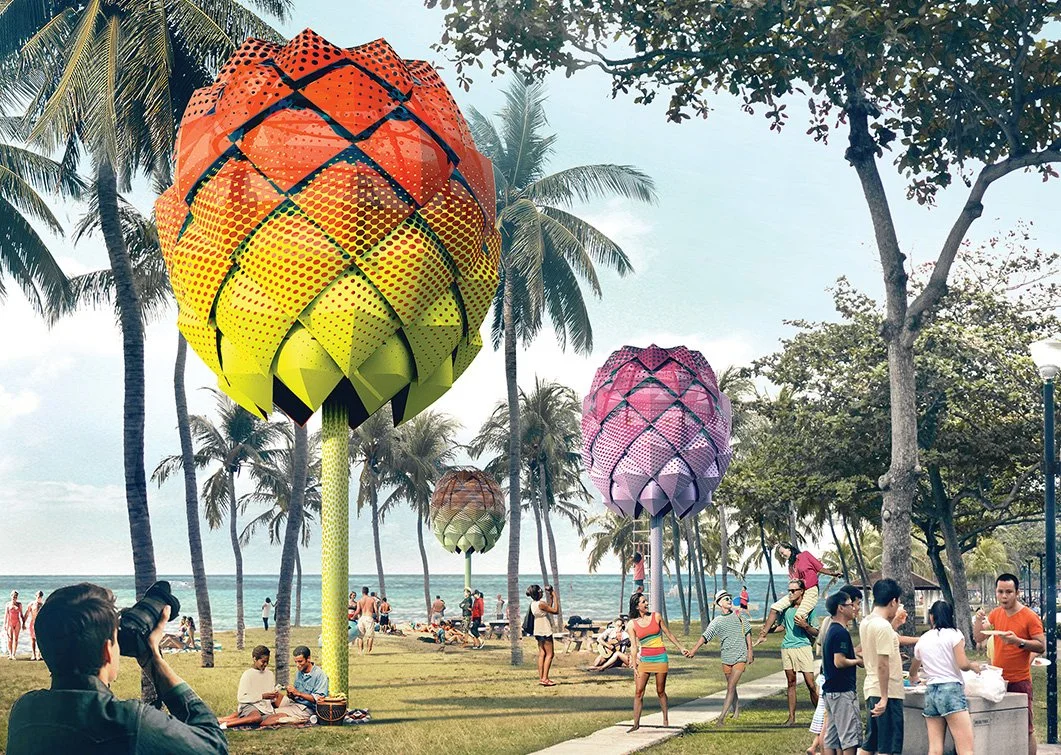
Colourful shells on slender stems give the proposed Beach Huts a distinctive yet delicate presence within East Coast Park.
Waste as an architectural language
In Beach Huts, the material’s previous life becomes part of the architectural idea. The proposal explores collecting, shredding, washing and reforming ocean plastic into high-density polyethylene, or HDPE, panels. Reassembled as overlapping scales, the discarded material would become the huts’ most recognisable feature. The envelope gives waste a new visual identity, inviting a different sense of its value.
The construction concept sets this expressive skin around a cross-laminated timber frame on a precast stem. Vision panels open the enclosure towards the sea, while thin-film photovoltaic cells are proposed within the scales. These elements give the apparent lightness a construction logic to explore further. The unrealised scheme asks how environmental thinking might shape the character of architecture as directly as its construction.
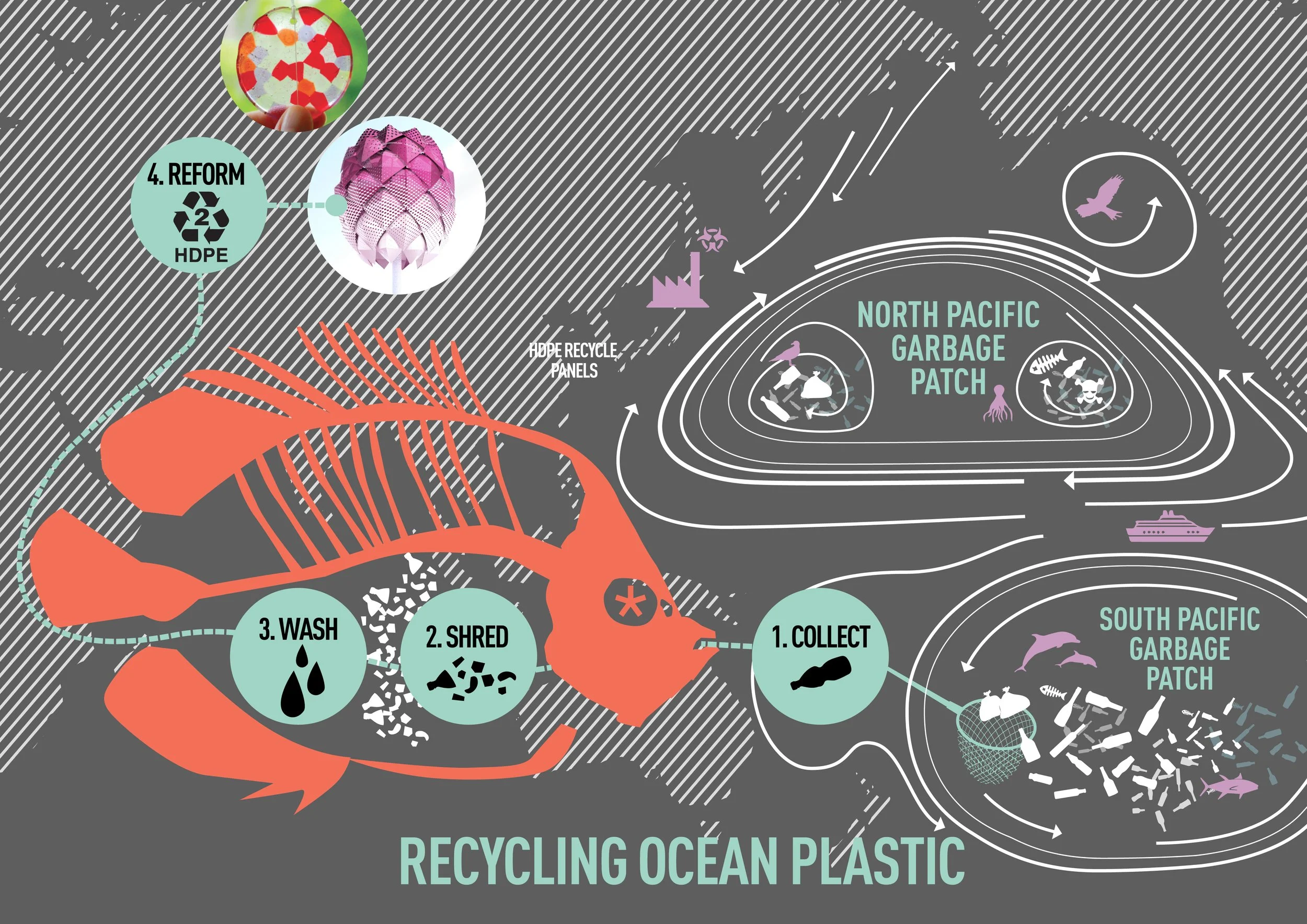
A proposed material cycle gives ocean plastic a second life as the huts’ distinctive outer skin.
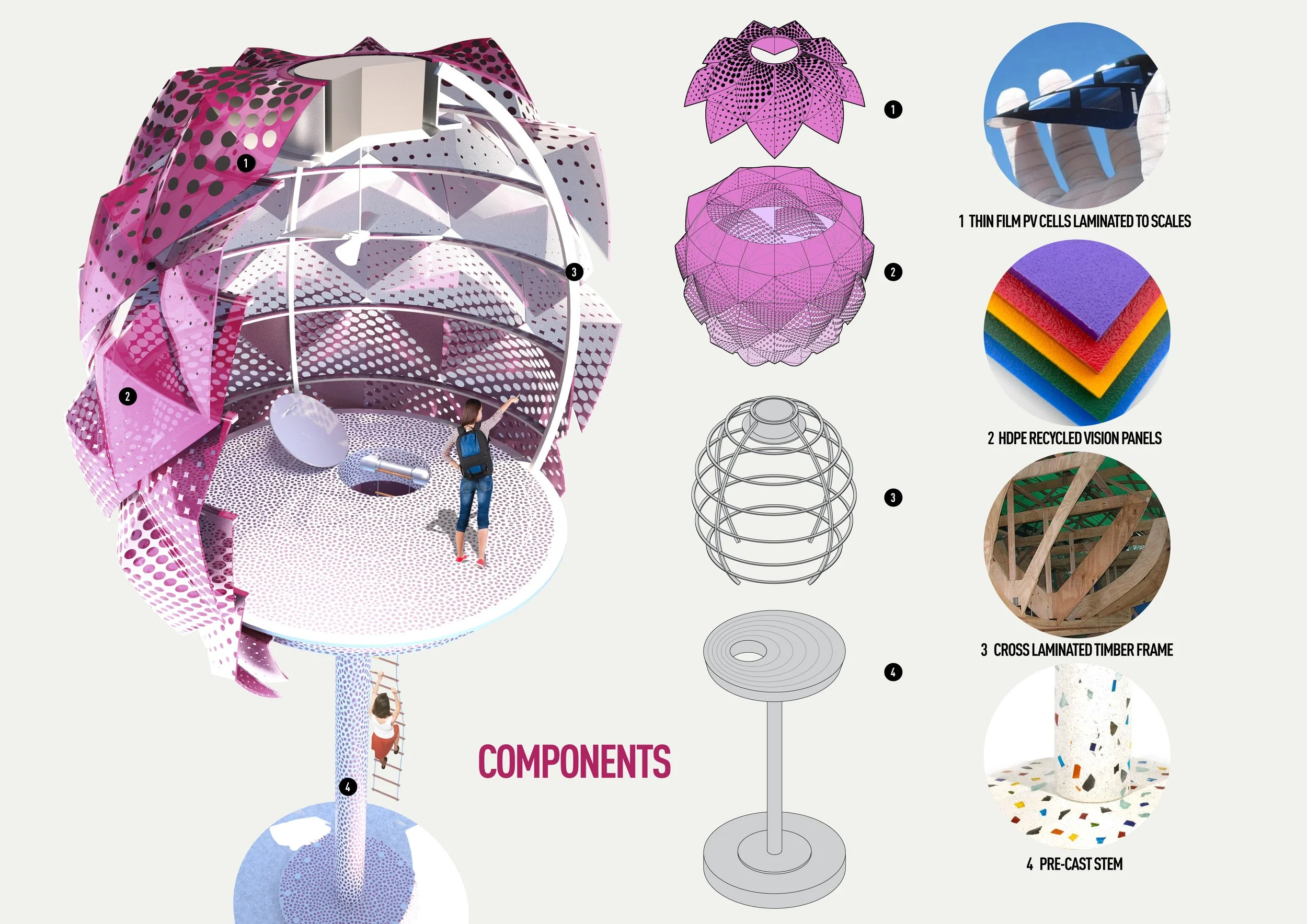
The exploded study connects the expressive skin with its proposed structure and solar cells.
The serious potential of play
Playfulness gives the project a way to reach people. Its raised rooms promise a different relationship with the horizon, while the coloured shells introduce an unexpected rhythm among the palms. In the evening visualisations, they read as scattered lanterns along the shore. The architectural image invites an imagined experience: climbing into a small room above the beach, looking out to sea, and discovering the story held within its skin.
“Making the invisible visible” begins with this connection between attraction and awareness. The intention is that curiosity about the huts leads to curiosity about their material. Plastic pollution, easily detached from the pleasure of a day at the coast, becomes part of the experience of inhabiting it. Beauty and enjoyment offer a way into a difficult subject.
For us, this is where the project meets the Archifest theme most closely. Thinking beyond the usual boundaries of architecture means recognising the building’s role in shaping attention as well as space. Beach Huts uses the familiarity of a holiday shelter to ask how design might draw environmental questions into everyday life.
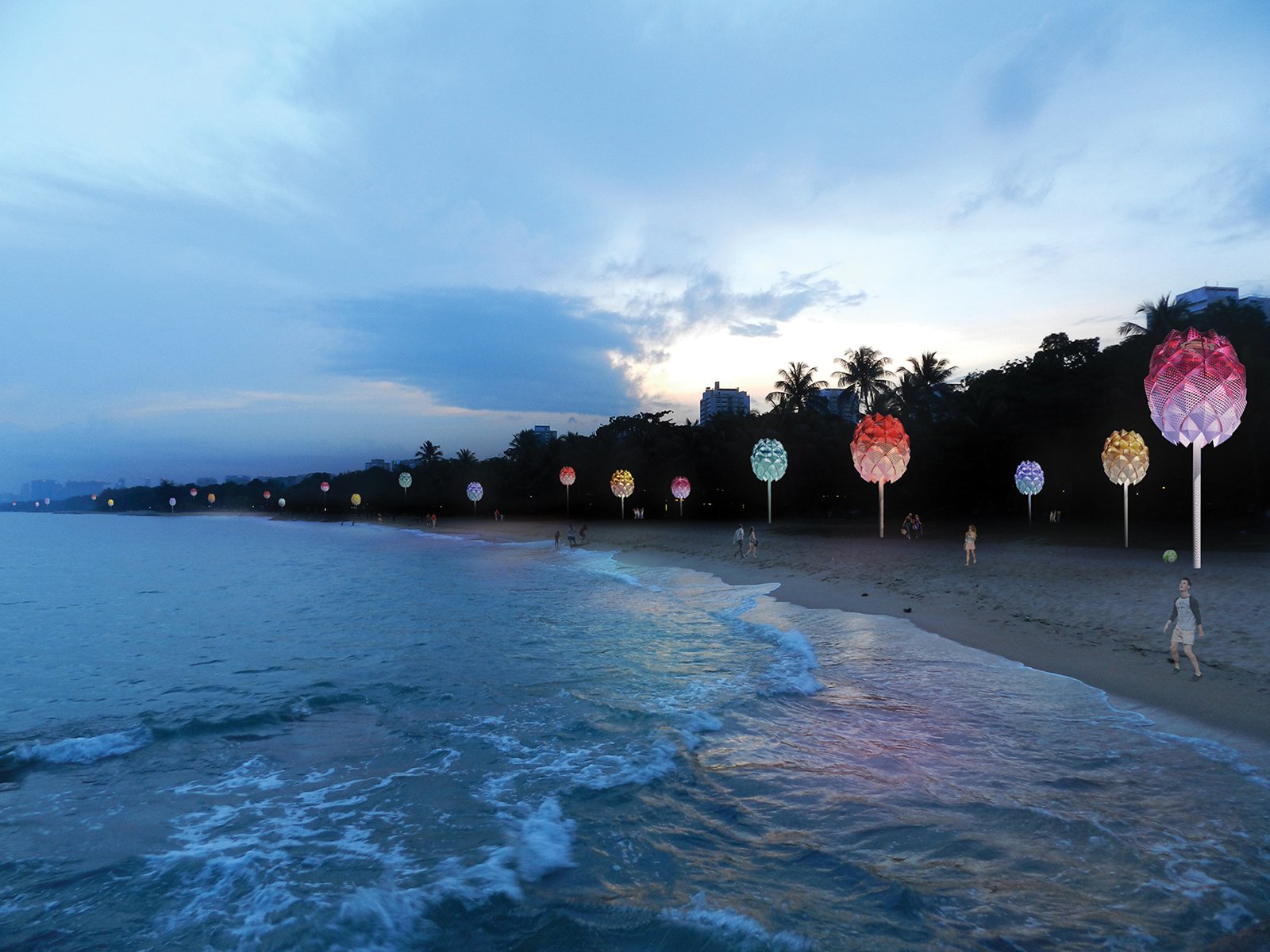
Imagined as lanterns along the shoreline, the huts bring their material story into the coastal nightscape.
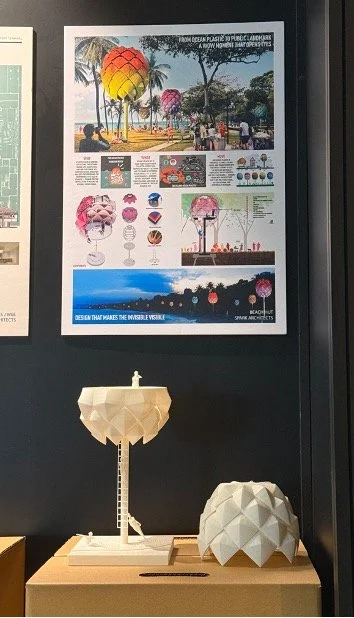
The exhibition board and model bring the proposal into physical view, with the detached upper shell revealing the space within.
The continuing life of an unbuilt idea
At Archifest, the exhibition board and physical model gave the proposal a tangible presence. Displaying the upper shell separately exposed the interior and the relationship between enclosure and support. The model brought the project’s apparent lightness into focus, allowing an idea first encountered as an image to be considered as an inhabitable object.
Sharing Beach Huts also offered a way to reflect on the role of unrealised work within practice. An unbuilt project can keep a question open, making it available to other designers and to future circumstances. Here, that question concerns the relationship between what we value and what we throw away. Beach Huts imagines architecture giving discarded plastic a place in our collective imagination: a small, inviting room from which to see the coast, and our relationship with it, differently.